
Assembly & Fastening
Assemble and fasten components accurately.


Control & Connectivity
PLCs, robot controllers and production software that coordinate the automated process and exchange operational data.
End-of-Arm Tooling
Grippers, welding equipment, screwdriving tools, dispensers and customised fixtures designed around the task.
Robotic Platform
Industrial and collaborative robots selected according to payload, reach, speed, precision and working environment.

WHAT IS AN INDUSTRIAL AUTOMATION SYSTEM?
MORE THAN A ROBOT — A COMPLETE PRODUCTION SOLUTION
Industrial automation systems combine robots, sensors, vision, controls and software to automate complete production processes.
They can operate as standalone cells or integrate into exi proving productivity, precision and operational continuity.

From production challenge to fully integrated automation.
From production challenge to fully integrated automation.
Vision & Sensing
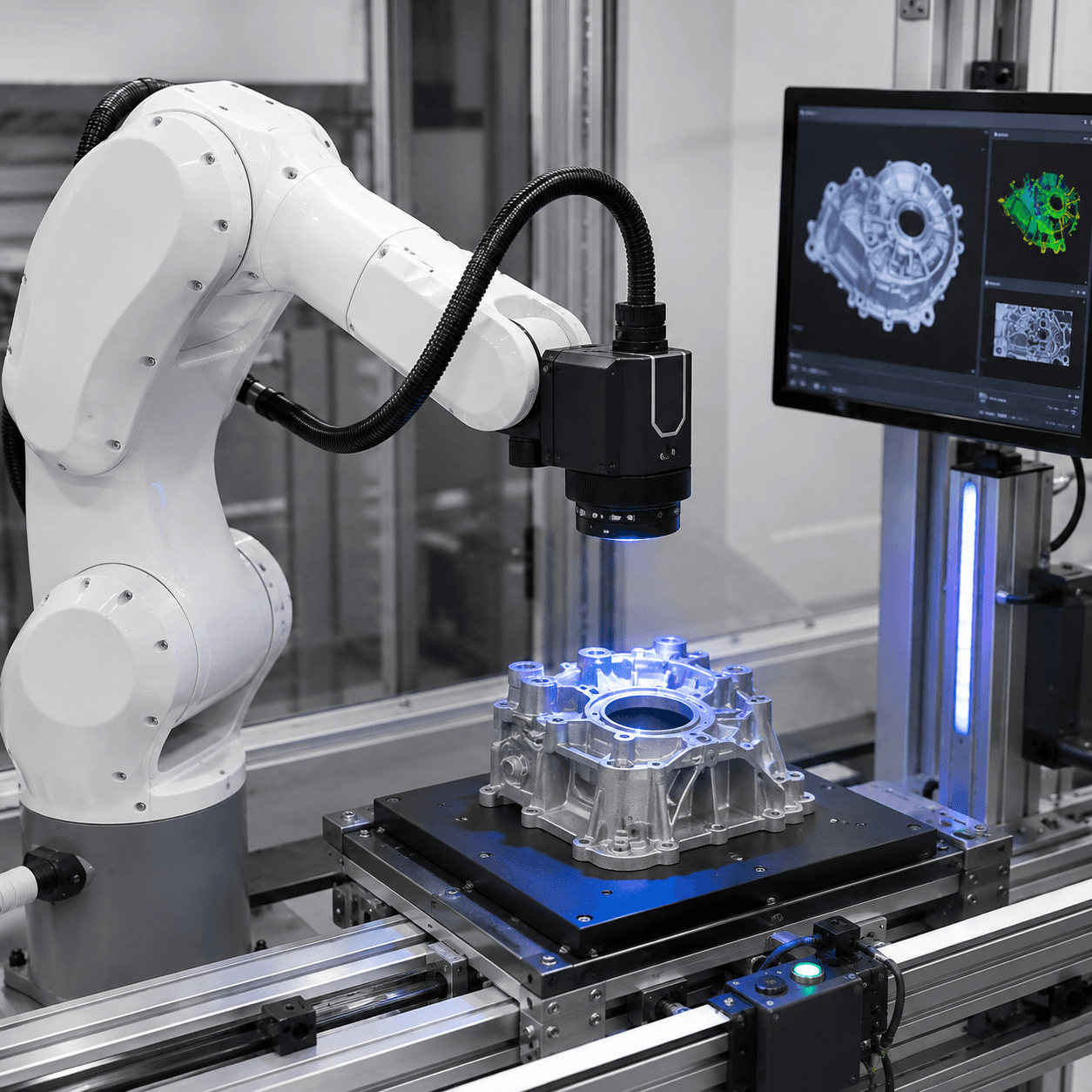
Cameras, scanners and sensors used to locate, guide, measure and inspect products or components.
Industrial automation systems combine robots, sensors, vision, controls and software to automate complete production processes.
They can operate as standalone cells or integrate into existing lines, improving productivity, precision and operational continuity.
WHAT IS AN INDUSTRIAL AUTOMATION SYSTEM?
MORE THAN A ROBOT — A COMPLETE PRODUCTION SOLUTION
KEY CAPABILITIES
WHAT INDUSTRIAL AUTOMATION SYSTEMS CAN DO?


KEY CAPABILITIES
WHAT INDUSTRIAL AUTOMATION SYSTEMS CAN DO?


01_hero_warehouse.png


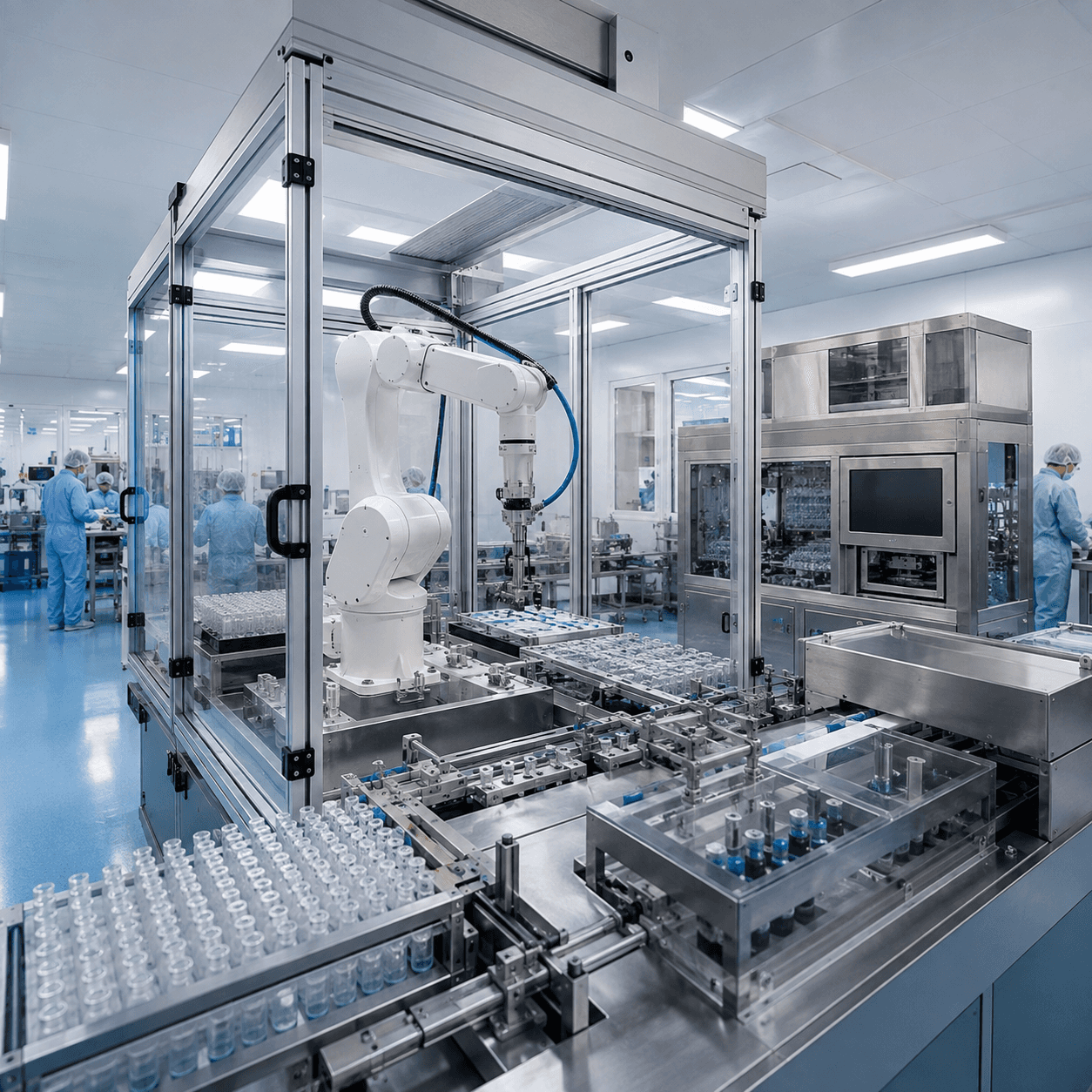
Assembly, handling, inspection and packaging processes requiring controlled and repeatable operation.


KEY APPLICATIONS
WHERE INDUSTRIAL AUTOMATION SYSTEMS CAN CREATE VALUE?
KEY APPLICATIONS
WHERE INDUSTRIAL AUTOMATION SYSTEMS CAN CREATE VALUE?


Assembly, handling, inspection and packaging processes requiring controlled and repeatable operation.


BENEFITS
WHY INDUSTRIAL AUTOMATION SYSTEMS?
Safer Workflows
Reduce direct exposure to repetitive or demanding activities.
Safer Workflows
Reduce direct exposure to repetitive or demanding activities.

Repeatable Precision
Execute programmed movements and process parameters consistently.


Flexible Production
Adapt programs and tooling for new products or production variants.

Improved Quality
Detect variation and support more reliable production results.
Scalable Automation
Expand from one automated process to additional production stages.
Greater Productivity
Maintain consistent production flow and reduce unnecessary process delays.

Greater Productivity
Maintain consistent production flow and reduce unnecessary process delays.

Safer Workflows
Reduce direct exposure to repetitive or demanding activities.
fff
Repeatable Precision
Execute programmed movements and process parameters consistently.
Flexible Production
Adapt programs and tooling for new products or production variants.
Improved Quality
Detect variation and support more reliable production results.
Scalable Automation
Expand from one automated process to additional production stages.
BENEFITS
WHY INDUSTRIAL AUTOMATION SYSTEMS?



